Surveying is among the foundations that are most essential to civil construction and engineering. Before bridges, roads and buildings or infrastructure projects can be constructed engineers must be aware of the contour and the level of ground. The process of leveling is used to determine the elevation of the various locations on the ground in relation to the reference level. It makes sure that structures are constructed at the right elevation and align.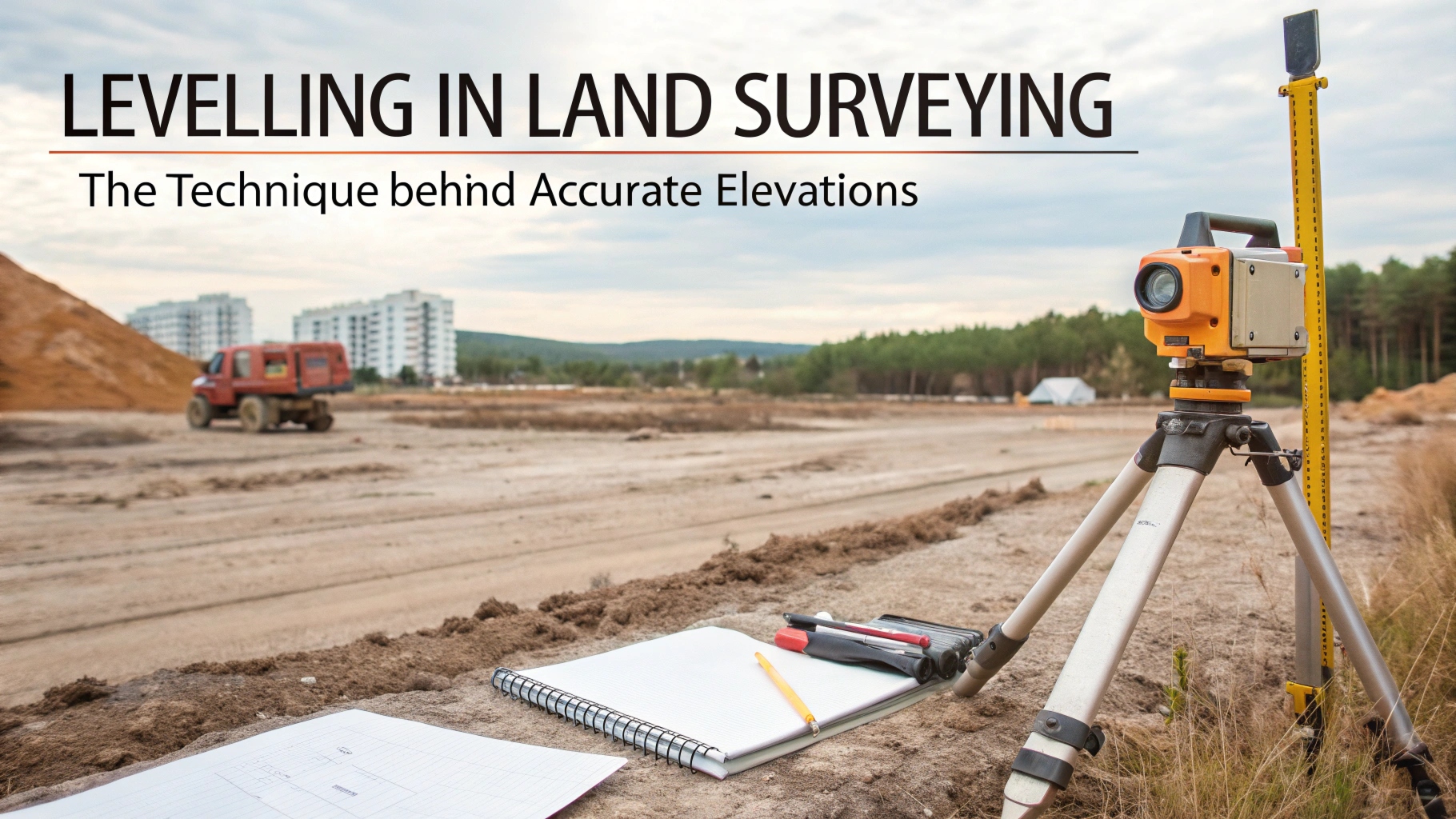
Accurate leveling plays a crucial role in infrastructure development. From the design of drainage systems to building railways and highways engineers rely on precise elevation information to avoid environmental and structural issues. Thanks to the rapid development of digital technologies and training programs like BIM certification courses, professionals are able to combine traditional techniques for surveying along with the latest digital modelling tools to increase accuracy in their projects.
The understanding of levelling techniques not just increases field accuracy, but also enhances the link between surveying and digital construction techniques.
Understanding the Importance of Levelling in Land Surveying
Levelling is an essential step in land surveying that is used to measure the elevations of different locations on earth’s surface. Surveyors use techniques for leveling for establishing benchmarks. They also gauge the elevation of different areas, and to prepare the land in preparation for building projects. Without precise levels, engineers can’t create drainage systems, road gradients or foundations for structural structures effectively.
For large infrastructure projects, such as canals, highways and railways. Levelling ensures that the surface profile meets the specifications of the project. Engineers must determine if the terrain slopes upwards or downwards, and what filling or excavation is needed to provide a solid base for construction. The process also prevents major structural issues. If the foundation of a building is built on a ground that is uneven without the proper elevation measurements the foundation could experience unstable expansion or instability in the structure. Through precise levelling methods engineers make sure construction starts at the right base level.
In the current engineering curriculum and practice, knowledge from surveying is frequently integrated with digital tools for construction. Professionals who take BIM certification courses get a better knowledge of the way field information collected from surveys can be used to construct precise digital models. These models assist engineers in coordinating design construction, and the management of projects effectively.
Key Reasons Levelling Is Important
- Accurately determines the elevation of the ground
- Helps establish construction benchmarks
- Make sure that the slope and drainage are properly design
- Helps to support the alignment of railway and road
- Avoids structural instability caused by uneven ground
Another significant aspect of levelling’s role is when it comes to large-scale projects of development. Planning for urban development, designing infrastructure and environmental control all depend on accurate elevation information gathered when surveying
MUST READ:What is Theodolite Survey? Definition, Methods and Applications.
Essential Techniques for Measuring Elevations in Land Surveying
Surveyors employ a variety of techniques to determine elevations during land surveying. These techniques allow engineers to calculate the difference in height from two points or even more with a high precision. The most commonly used method is using a leveling instrument that is set on a tripod with a graduated staff positioned near the points of survey. In this process the surveyor collects measurements from the levelling staff and determines the elevation difference between two points. These readings can help determine if the ground should be filled or cut in the course of construction. Even minor errors in measurements can impact construction plans for projects in the infrastructure sector.
Another method that is commonly used is the use of differential leveling. This technique measures the elevation difference between two points that are far away using multiple intermediate readings. The method is particularly useful on large construction sites that require direct measures between two places.
Modern surveying also requires the integration of elevation data with digital design tools. Engineers working with digital platforms typically improve their capabilities through courses like this Best BIM course for civil engineers. These courses teach professionals how to incorporate fields data and digital models in order to enhance accuracy and efficiency in the planning of projects.
Common Techniques Used in Elevation Measurement
- Differential levelling
- Profile levelling
- Fly sniveling
- Reciprocal levelling
- Precise levelling
Each method is based on the specific construction requirements along with the conditions of the site and the degree of precision required to construct.
Understanding Levelling in land Surveying Methods and Tools in Surveying
Surveying for level involves a variety of tools and instruments that are designed to accurately measure elevations. The most frequently employed instrument is the one called a levelling which is also referred to as the dumpy level or automated level. It is set on a tripod, and is used in conjunction along with a levelling staff in order to measure the height difference between two points. The instrument is used for leveling by setting the horizontal line of vision. If the surveyor is able to read the reading on the levelling staff they can determine the elevation relative to the point. This easy, yet accurate process provides the basis for many surveying procedures.
Another important tool to conduct modern-day surveying involves the use of the digital. In contrast to traditional instruments, digital level systems automatically determine readings and minimize the chance of human error. They provide quicker results and enhance the accuracy of measurements especially for massive infrastructure developments. Digital transformation also affects the field of surveying. Engineers are now integrating the data for leveling with digital modeling tools to design modern buildings. Courses for training, such as the Revit MEP online course assist professionals to understand how field data is linked to the building design system and project management.
Common Levelling Instruments
| Instrument | Purpose | Application |
| Dumpy Level | Measures horizontal sight lines | Basic surveying techniques for land |
| Automatic Level | Self-leveling device | Construction projects |
| Digital Level | Elevation measurement by electronic means | High-precision surveys |
| Levelling Staff | Gradually grading the rod of measurement | Readings of elevation |
Surveyors can use these tools to collect exact data to support the planning of infrastructure projects and construction.
A Practical Guide to Levelling Techniques in Surveying
Leveling methods follow a planned method to guarantee precise measurement in the field. Surveyors start by putting the instrument to level on a tripod stable enough and then ensuring it is horizontally aligned. The levelling tool is placed at the spot at which the elevation is to be taken.
The surveyor reads readings from the lens of the device and then records the measurements in the chart. These readings are used in order to determine the height difference between the station of the instrument and the point of survey. Repeating this process over many points, surveyors can determine the elevation of the terrain.Experience gained in the field is vital to understanding the best techniques for levelling. Surveyors should ensure that their instruments are in proper alignment, a precise record of measurement, and a careful calculation of the elevation difference. Small errors in interpreting or recording data could result in inaccurate results.
Modern construction projects typically include surveying in the digital workflow for design. Discussions like AI-Powered BIM Tools Are Changing Design demonstrate the ways technology is changing the way engineers work. Through the combination of traditional surveying techniques using digital modelling tools engineers can produce more precise and coordinated designs for construction.
Basic Steps in Levelling
- Set the levelling device on a tripod
- Adjust the instrument so that it can achieve a horizontal line of vision
- The levelling staff should be placed at the point of survey
- Record measurements and read the results.
- Calculate elevation differences
These practical steps ensure reliable data collection during surveying operations.
Key Methods Used to Determine Accurate Elevations in Surveying
Surveyors use a variety of methods to determine the accuracy of elevations, based on the type of project. Each method offers distinct advantages based on the terrain and the accuracy requirements of the size of the project.
Differential leveling is among the most popular methods of calculating the elevation difference from distant places. It involves a variety of instrument setups and intermediate staff readings to accurately calculate height differences. Reciprocal levelling is an alternative method of surveying across obstacles like valleys or rivers. This method is based on measuring at both the sides in order to lessen the effects of environmental conditions or instrument misalignment.
Modern construction projects rely on the integration of surveying data with the use of digital systems for engineering. Professionals who have completed BIM certification courses frequently discover how elevation data can be used to construct precise digital models for the design of infrastructure.
Comparison of Levelling in land Surveying Methods
| Method | Description | Typical Use |
| Differential Levelling | The measurement of elevation changes is done by combining multiple measurements | Large construction sites |
| Reciprocal Levelling | Useful across obstacles to minimize mistakes | Surveys of valleys or rivers |
| Profile Levelling | Finds the ground profile along the line | The alignment of railway and road |
| Fly Levelling | An easy method to establish benchmarks | Surveys in the preliminary stages |
Accurate elevation determination aids engineers create foundations that are stable and drainage systems that are appropriate and efficient infrastructure layouts.
Conclusion
The leveling process in surveying is a crucial technique to determine the elevation of ground and ensure precise construction planning. Without proper leveling engineers would have a difficult time trying to design buildings, roads drainage systems, and infrastructure projects efficiently and safely. With the help of specialized equipment and proven surveying techniques experts can identify the elevation of a building with astonishing precision. These measurements aid engineers in preparing sites for construction and guarantee that structures are constructed on sturdy and aligned foundations.
Nowadays, the surveying practice is developing with digital technology and the most advanced engineering tools. Professionals who take part in education programs like BIM certification courses, Best BIM course for civil engineers and the Revit MEP online course acquire invaluable skills that integrate traditional methods of surveying to modern technology in construction. While infrastructure construction projects increase in complexity and complexity, accurate levelling will remain essential in civil engineering. Combining the traditional knowledge of surveying with the latest technology guarantees all construction work is secure, efficient, effective, and built upon reliable elevation information.
FAQs Related Blog
- Why is leveling important in modern construction projects?
Levelling helps engineers determine accurate ground elevations before construction begins. It ensures foundations, roads, and drainage systems are built at the correct height, preventing structural issues and water flow problems. Accurate elevation data is essential for infrastructure planning. - How does surveying data integrate with BIM workflows?
Surveying data such as elevation points and terrain models can be imported into BIM software to create accurate digital site models. These models help engineers visualise infrastructure projects before construction and reduce errors during execution. - Which software is commonly used with BIM in civil engineering projects?
Civil engineers typically use tools such as Autodesk Revit, Civil 3D, and Navisworks for BIM-based workflows. These tools support 3D modelling, clash detection, and infrastructure design coordination in modern construction projects. - What skills do civil engineers need to work with BIM?
Civil engineers working with BIM should understand 3D modelling, clash detection, project coordination, and construction documentation. Knowledge of BIM software helps engineers collaborate with architects, contractors, and project managers effectively. - Can BIM improve the accuracy of infrastructure design?
Yes. BIM improves design accuracy by allowing engineers to visualise projects in a digital environment, detect clashes between systems, and optimise construction planning before work begins. - What are the career benefits of learning BIM for civil engineers?
Learning BIM opens opportunities in roles such as BIM Civil Engineer, BIM Coordinator, Civil 3D Specialist, and Infrastructure Designer. These roles are increasingly in demand as construction companies adopt digital project workflows. - Is BIM training useful for civil engineering students?
Yes. BIM training bridges the gap between academic learning and real construction industry requirements by teaching software tools and collaborative workflows used in modern infrastructure projects. - What industries require BIM skills today?
BIM skills are required in architecture, infrastructure design, construction management, urban planning, and facility management. These industries rely on digital modelling to improve efficiency and project coordination. - How is technology transforming surveying and civil engineering?
Technologies such as BIM, AI, and digital twins are transforming surveying and civil engineering by enabling data-driven decision making, accurate project modelling, and better collaboration across project teams. - Where can civil engineers learn BIM professionally?
Civil engineers can develop BIM expertise through specialised training programs and industry-focused certification courses offered by organisations like BIM Americas, which provide practical project-based learning and modern BIM software training.
Inspiring Quotes Related to Surveying and Civil Engineering
- “Engineers like to solve problems. If there are no handily available problems, they will create their own.”
— Scott Adams - “The scientist discovers a new type of material or energy and the engineer discovers a new use for it.”
— Gordon Lindsay Glegg - “Civil engineering is the art of directing the great sources of power in nature for the use and convenience of man.”
— Thomas Tredgold - “One man’s ‘magic’ is another man’s engineering.”
— Robert A. Heinlein - “The great engineer is the one who combines imagination with technical knowledge.”
— Henry Petroski - “Good engineering saves lives, time, and money.”
— Anonymous Engineering Principle - “Without engineers, modern civilization would simply not exist.”
— Queen Elizabeth II - “Engineering is achieving function while avoiding failure.”
— Henry Petroski - “Precision in measurement is the foundation of every great engineering project.”
— Isambard Kingdom Brunel - “The engineer has been, and is, a maker of history.”
— James Kip Finch