Being denied admission after school can feel like a disappointment. Many students experience this feeling and are unsure of what they should do following. However, your career path isn’t determined by the one admission choice. There are many routes that could bring you success and one of the most appealing choices today is establishing the foundation for a Career in BIM Courses.
In this blog we’ll examine the ways BIM classes can assist you in your journey to a better future, the reasons they’re in high demand and what trends such as Modern Indian Architecture are increasing the demand for highly skilled professionals.
Not Getting Admission Is Not the End
It’s important to recognize that not getting the chance to go to college doesn’t necessarily mean that your life is in danger. A lot of successful people have pursued different paths but still have successful careers.
Nowadays, companies focus more on the abilities rather than degrees. This is the reason why the Career in BIM Courses can be a wise and logical choice.
The rapid growth of Modern Indian Architecture shows that the design and construction industry is changing, creating many opportunities for talented people.
What is BIM and Why Does It Matters?
Building Information Modelling (BIM) is a digital method used in design and construction. It aids professionals create, design and manage buildings by using the latest software.
The technology is now becoming vital in the business. It’s the reason why increasing numbers of students are opting for a Career in BIM to acquire practical knowledge and work-ready skills.
With the emergence in Modern Indian Architecture, BIM plays a major part in the creation of intelligent, efficient, sustainable, and long-lasting structures.
Why Choose a Career in BIM Courses?
There are many reasons why choosing a career in BIM courses is a viable choice, particularly when you were not able to gain admission to the college after school.
1. Skill-Based Learning
BIM classes focus on the practical aspects of BIM instead of theoretical knowledge. Learn how to utilize actual instruments and tools.
2. High Demand
The need for BIM professionals is growing as more businesses adopt digital construction techniques.
3. Quick Career Start
The courses are shorter in comparison to conventional degrees which allows students to begin work earlier.
4. Strong Growth Potential
Experienced workers can advance to higher positions and earn higher salaries.The impact on Modern Indian Architecture is also providing more opportunities in this area.
Types of BIM Courses You Can Choose
In line with your preferences depending on your interests, you can pick from a variety of BIM courses.
1. BIM MEP Course
The BIM MEP course focuses on electrical, mechanical, and plumbing systems used in building. The course can be beneficial for those interested in design and engineering.
2. Civil Engineering BIM Course
The Civil Engineering BIM Course is specifically designed for students who wish to be involved in construction and infrastructure projects.
3. BIM Manager Online Course
The BIM Manager online course will help you develop the skills of project management and coordination. It teaches you how to assume leading roles within BIM projects.
All of these options can assist you in building a solid career in BIM Courses that are in line with the demands for Modern Indian Architecture.
Skills You Will Learn in BIM Courses
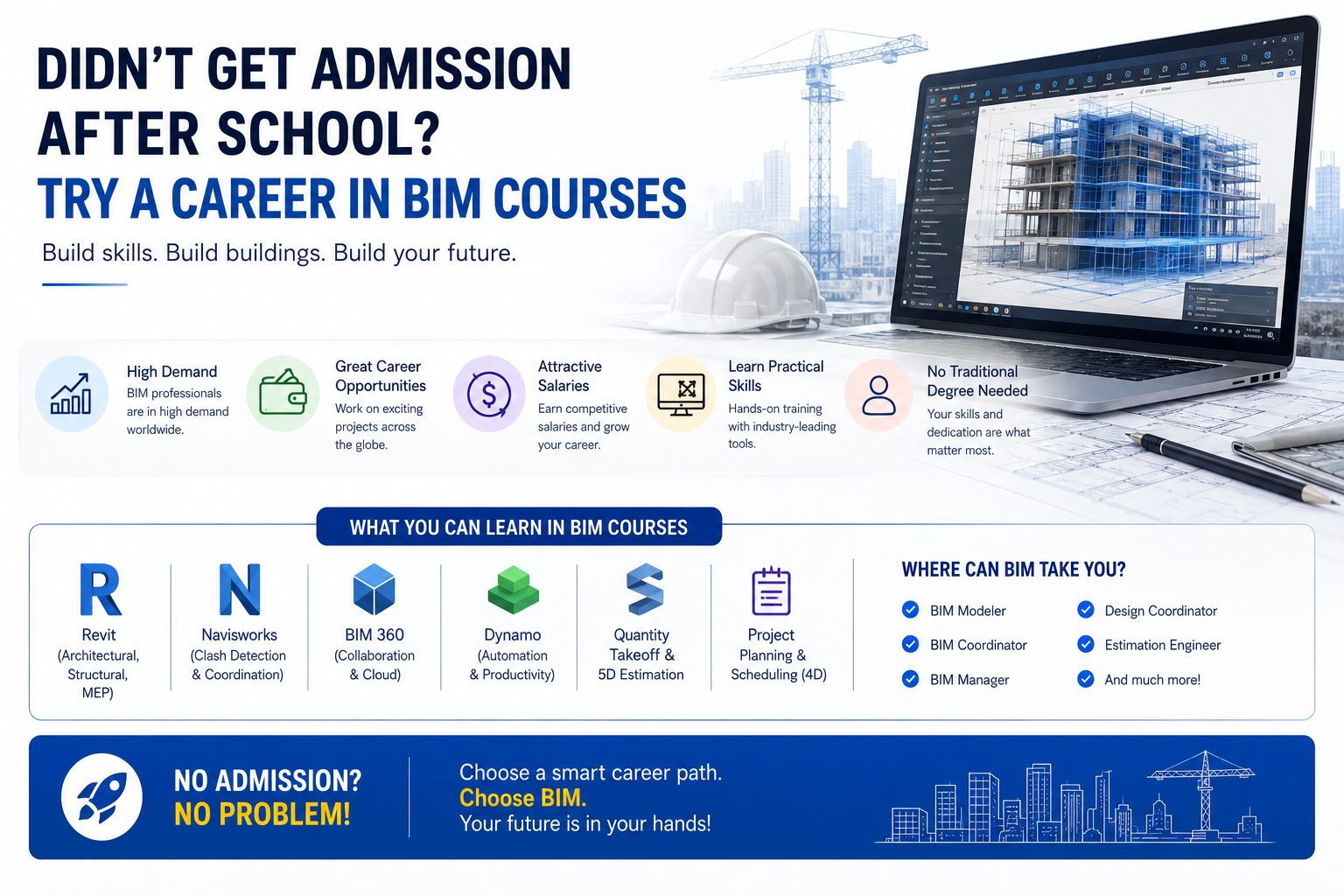
If you decide to pursue a career within BIM Courses, you’ll learn valuable skills like:
- 3D modeling and design
- Coordination and planning of projects
- Understanding construction processes
- Working using BIM software
These abilities are crucial in the current construction industry and are extensively employed in projects that are related with Modern Indian Architecture.
Career Opportunities After BIM Courses
Once you’ve completed your training there are numerous job opportunities to choose from. This is among the major advantages of pursuing the Career with BIM Courses.
Common roles include:
- BIM modeller
- BIM coordinator
- Design engineer
- BIM manager
If you have more knowledge, you could become a leader particularly after you have completed the BIM Manager Online Course
The growing popularity of Modern Indian Architecture is increasing the need for these positions which makes BIM an option for a career that is future-proof.
How to Choose the Right BIM Course
The right path to take is crucial to your success. Here are some suggestions:
1. Check Course Content
Be sure that the course includes practical instruction and real-world applications.
2. Look for Expert Trainers
Experienced professionals can make a huge difference.
3. Focus on Certification
Find courses that offer recognized accreditations.
4. Match Your Interest
Choose a course such as BIM MEP Course or Civil Engineering BIM Course in accordance with your career objectives.
If you follow these steps, you will be able to create a solid career through BIM Courses.
Role of BIM in Modern Architecture
BIM is revolutionizing ways buildings are planned and built. BIM allows architects and engineers to build detailed digital models, and increase efficiency.
For Modern Indian Architecture, BIM is utilized to create smart and environmentally sustainable structures. It reduces errors while also helping to save time and improve collaboration.
This is the reason choosing to pursue a Career in BIM courses is an excellent choice for those who wish to take part in BIM’s future construction.
Importance of Continuous Learning
After you have completed your program, you shouldn’t stop. The business is always growing, and it is essential to keep up-to-date.
After you’ve completed a Civil Engineering BIM Course, you will be able to improve your skills by taking an BIM Manager online course. This allows you to advance your profession and assume larger tasks.
The evolution of Modern Indian Architecture shows that continuous learning is essential to achieving success.
ALSO READ: One Technical Skill You Can Start After 12th and Build a Long-Term Career
Future Scope of BIM Careers
The future of BIM is extremely promising. As technology continues to advance, increasing companies are using BIM to design their projects.
This means a greater number of job opportunities with higher salaries and a long-term growth in your career. Making the decision to pursue a career in BIM Training courses will help you build a stable and beneficial future.
The impact from Modern Indian Architecture will continue to increase the demand for highly skilled BIM professionals.
Final Thoughts
Being denied admission to a college after high school may seem like a setback. However, it’s also an opportunity to try different ways. A career in BIM Courses is the most practical and efficient method to create your future.
If you decide to take a BIM MEP Course, Civil Engineering BIM Course, or a BIM Manager Online Course, the possibilities are endless.
Learn from the development in Modern Indian Architecture and focus on taken the capabilities that matter. Your professional career isn’t solely based on one choice, it is shaped by the decisions that you make in the future.
Keep learning, stay positive and make the first step toward the best future in BIM.
FAQs
- I didn’t get college admission. Can I still do a BIM course?
Yes, you absolutely can. A BIM course is a skill-based program, so it does not always require a traditional college degree. Many students choose BIM after school because it focuses more on practical knowledge and job-ready skills. If you are interested in design, construction, or technology, this can be a very good alternative path. - What is a BIM course in simple words?
A BIM course teaches you how to use software to design and manage buildings digitally. Instead of drawing plans on paper, you create detailed 3D models of buildings. These models help engineers and architects plan everything more accurately, including structure, materials, and systems. - What qualification is required for a BIM course?
In most cases, you only need to pass 12th grade to join a BIM course. Having a science background can be helpful, especially if you want to understand technical concepts more easily, but it is not always compulsory. Many institutes also accept students from other streams if they are willing to learn. - How long does a BIM course take to complete?
The duration of a BIM course depends on the level and type of course you choose. Basic courses can take around 3 to 6 months, while advanced or specialized courses may take up to 1 year. Shorter courses help you start working quickly, while longer ones give deeper knowledge. - Will I get a job after completing a BIM course?
Yes, there are good chances of getting a job after completing a BIM course, especially if you have strong practical skills. You can apply for roles like BIM modeller, BIM coordinator, or design engineer. Your job opportunities will improve further as you gain experience and build a strong portfolio. - What is a BIM MEP course?
A BIM MEP course focuses on Mechanical, Electrical, and Plumbing systems in buildings. In this course, you learn how to design and manage systems like wiring, air conditioning, water supply, and drainage using BIM tools. It is a great option if you are interested in building services. - What is the difference between a Civil Engineering BIM course and a regular BIM course?
A Civil Engineering BIM course is more focused on construction projects such as roads, bridges, and buildings. It teaches you how to apply BIM in real construction and infrastructure work. A general BIM course may cover broader topics but may not go as deep into civil engineering concepts. - How can I become a BIM Manager?
To become a BIM Manager, you first need to learn basic BIM skills and gain some work experience in the industry. After that, you can take an advanced course like a BIM Manager online course. This helps you develop leadership, coordination, and project management skills required for senior roles. - What is the average fee for a BIM course in India?
The fees for BIM courses can vary depending on the institute and course level. On average, it can range from ₹30,000 to ₹1,50,000. Advanced or specialized courses may cost more, but they often provide better training and career opportunities. - Is BIM a good career for the future?
Yes, BIM is considered a strong career option for the future. As construction and architecture are becoming more digital, companies are increasingly using BIM technology. This means there will be more demand for skilled BIM professionals in the coming years. - Can I do a BIM course online?
Yes, many institutes offer BIM courses online. These courses allow you to learn from home and are flexible in terms of timing. However, it is important to choose a course that includes practical training and software practice, not just theory. - Which software is used in BIM courses?
In BIM courses, you will learn popular industry software such as Revit, Navisworks, and AutoCAD. These tools are widely used by professionals to create 3D models, manage projects, and coordinate designs across teams. - Can non-engineering students do a BIM course?
Yes, non-engineering students can also join BIM courses. However, they may need to spend extra time understanding basic construction and design concepts. With consistent practice and learning, they can still build a successful career in this field. - What salary can I expect after a BIM course?
As a beginner, you can expect a starting salary between ₹15,000 to ₹30,000 per month in India. With experience and better skills, your salary can increase significantly. Senior roles like BIM Manager can offer much higher pay. - Is a BIM course better than a college degree?
It depends on your goals. If you want a quick start to your career and prefer practical learning, a BIM course is a great option. However, a college degree provides broader knowledge. Many students combine both, but BIM alone can still lead to good career opportunities.