Surveying instruments have developed considerably, but compasses have a place of honor in fieldwork. When you compare Prismatic vs. Surveyor’s Compass, understanding the difference is crucial for professionals, students, or anyone who wants to get into surveying land. Each instrument has the same purpose of measuring bearings, but it differs in its design, precision and ease of use.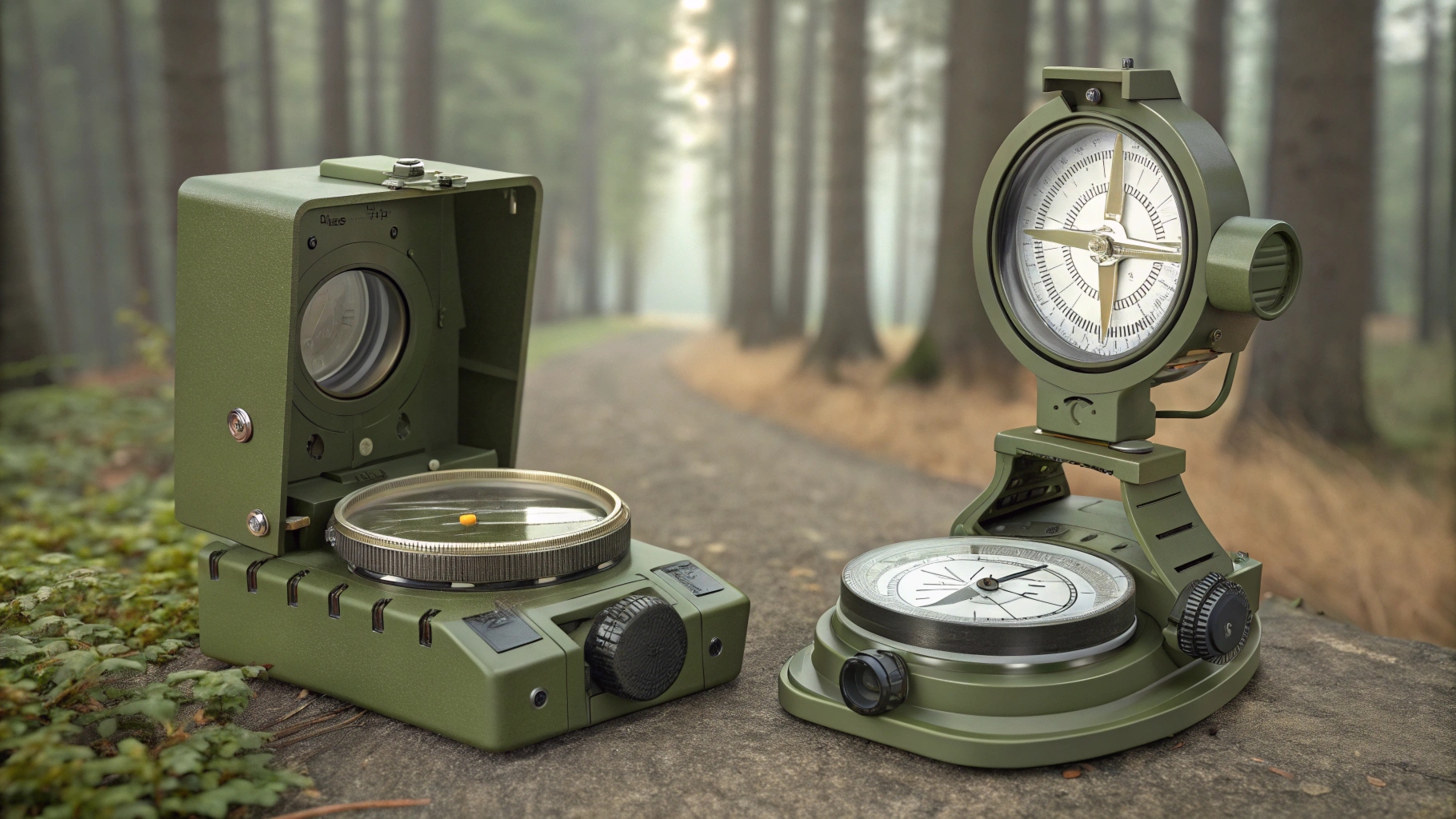
In the modern world in which digital tools are increasing in popularity but traditional instruments continue to be essential to developing the fundamental skills of surveying. Most students nowadays begin with an BIM certification course online to grasp modern workflows; however, mastering the basics of instruments such as compasses provides a solid technological base. This guide will walk you through the differences between them, their applications and tips for choosing the most appropriate one.
Understanding the key differences between Prismatic vs Surveyor’s Compasses
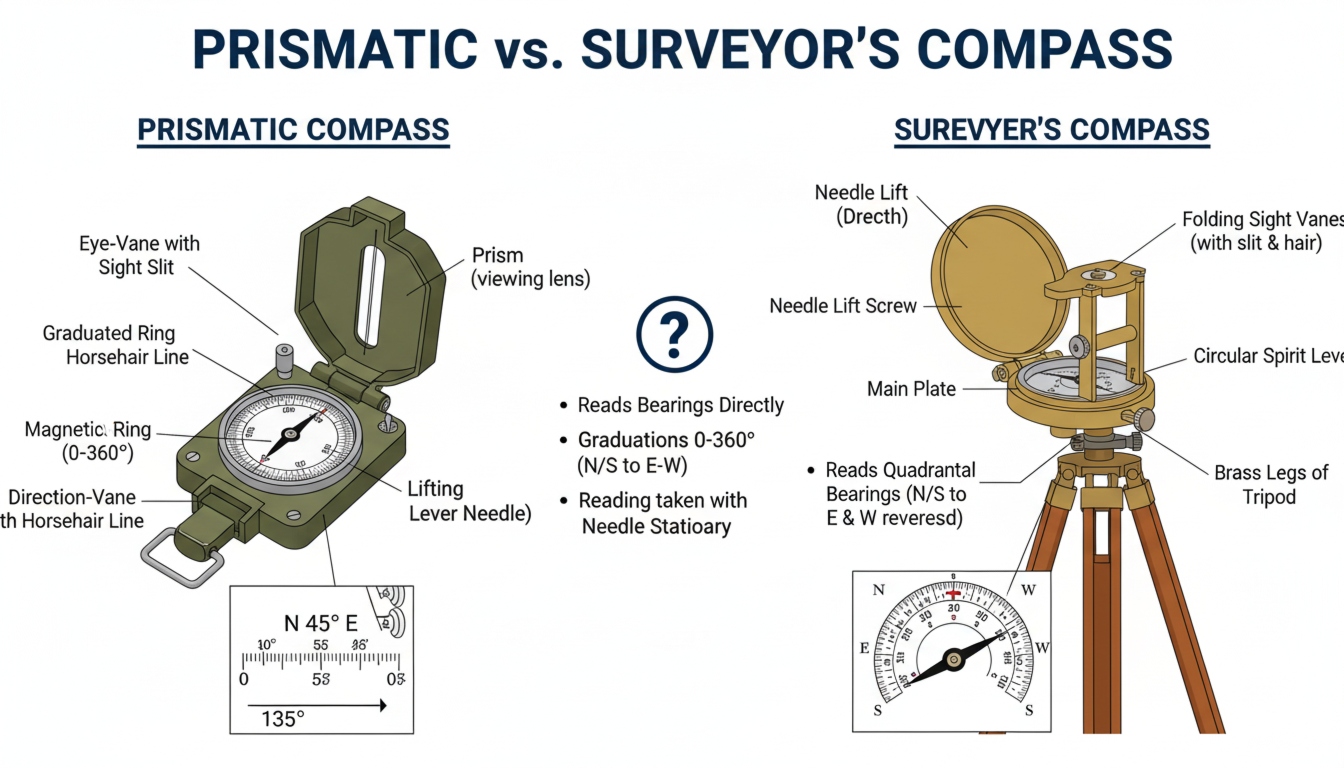
In the discussion of Prismatic vs. Surveyor’s Compass the primary distinction is in the way each determines bearings and the way that users interact with it. A prismatic compass permits the surveyor to simultaneously see the object and read the bearing with a prism, making observations quicker and more efficient. Contrary to the compass of a surveyor requires that the user glance at the compass box to make readings, which could disrupt the process. This is a major difference in the efficiency of field work, particularly for large-scale projects in which speed is crucial. Students taking the BIM certification course online Understanding these traditional tools can provide a solid base before moving to digital surveying technology.
A key distinction between Prismatic vs. Surveyor’s Compass is the system of bearings employed. The compass that is prismatic typically employs full circular bearings (0deg to 360deg) while the surveyor’s compass utilizes the quadrantal or reduced bearing. This difference impacts how the data are recorded and processed. Students taking the Revit online course usually discover it beneficial to understand these concepts since accurate data from sites feeds into accurate modeling. In addition, traditional methods such as Levelling in land surveying work in conjunction with compass-based measurements, highlighting the importance of understanding both of these tools.
The Key Differences
- The Prismatic compass makes use of whole circle bearings
- Surveyor’s compass uses quadrantal bearings
- Faster readings when using prismatic Compass
- The Surveyor’s Compass is a an easier layout
Steps to Identify Differences:
- Be aware of the method used to read angles
- Find out the bearing system you are using.
- Examine the usability of fields
- Compare observation speed
Design, Usage, and Precision: What Makes Each Compass Unique?
In the case of Prismatic vs. Surveyor’s Compass the design is a major factor in determining the usability and accuracy. The compass with prismatic features is compact light, and comes with a prism, which enhances the readability, particularly in bright conditions. Its design permits one-handed operation, which makes it perfect for speedy traversing tasks. In contrast the surveyor’s compass is usually placed on a tripod and is intended for stability, not speed. This makes it ideal for those who are new to the field and environments that are controlled. Professionals taking the BIM course for civil engineers of all disciplines, knowing the way design influences the accuracy of field data is vital in integrating survey data into digital workflows.
Also, the use of both instruments when it comes to Prismaticand. Prismatic vs. Surveyor’s Compass The prismatic compass is commonly used for rough terrains and quick surveys, whereas the surveyor’s compass is more suitable to be used for educational purposes and is simpler measurements of land. In terms of precision, the prismatic compass generally provides greater accuracy because of its optical read system. However, the compass used by surveyors gives a clear understanding of directional direction that is helpful for students. Integrating traditional methods such as the use of levelling in land surveying with using compass will give you a complete understanding of the terrain mapping.
Design and Usage Highlights:
- The Prismatic Compass is lightweight and effective
- Compass of the Surveyor: reliable and easy to master
- Optic prisms improve reading accuracy
- Tripod mounting enhances stability
How to Use Every Compass:
- Install the instrument correctly
- Align the object to the desired one
- Read bearings
- Verify measurements and record the results.
Quality, Ease of Use and applications compared
When you are weighing Prismatic vs. Surveyor’s Compass in the process, accuracy is often the deciding aspect. The compass that is prismatic is more precise because of its capacity to offer simultaneous reading and sighting. This minimizes the chance of human error and improves the efficiency of fieldwork. The surveyor’s compass is slightly less precise, and is a source of use, particularly for those who are new to. This makes it an excellent teaching tool for foundational surveying classes, and even the ones included in the BIM certification course online
The ease of use is an additional crucial aspect of Prismatic vs. Surveyor’s Compass The compass that is prismatic requires some education because of the prism-based system of reading; however, the surveyor’s compasses are simpler. With regards to applications the prismatic compass can be frequently employed in engineering surveys, geological mapping, and for forestry. The compass of the surveyor, however, is typically used in small-scale academic settings and land surveys. Combining the tools of these with methods like Levelling in land surveying improves the overall accuracy of surveys and increases their reliability.
Comparison Points
- The compass is prismatic, which means it has higher accuracy.
- The compass of a surveyor is easier to master
- For all levels of experience
- Applications differ based on project size
Actions to Improve Accuracy
- Check the calibration of the compass frequently
- Beware of magnetic interference
- Make sure you read a variety of books.
- Check the cross-checking method with other methods.
ALSO READ :Prismatic Compass: The Classic Tool That Guides Surveyors
Which compass is better for modern surveying tasks?
In contemporary surveying, the debate over Prismatic vs. Surveyor’s Compass is often based on practicality and integration into advanced tools. The prismatic compass is typically preferred for modern-day tasks because of its accuracy and efficiency. It is well-suited for fast-paced projects where speedy data collection is crucial. Professionals taking part in the Revit online course, accurate field data generated by tools like the prismatic compass will greatly improve the quality of digital modeling.
But, the surveyor’s compass is still useful for specific situations within the Prismatic vs. Surveyor’s Compass discussion. It’s particularly helpful in teaching the fundamentals of surveying and in projects that require simplicity over speed. Although modern technology like GPSand total stations are dominating the market, understanding the traditional tools is still vital. Techniques like Levelling in land surveying are still used to supplement measurement using compass, which provides an all-encompassing approach to surveying.
Modern Relevance Factors:
- The compass is a good choice for quick surveys.
- The compass of a surveyor helps in learning
- Both contribute to the fundamental knowledge
- Integrating digital tools into the workflow is crucial.
The Best Methods to Select for Modern Work:
- Review project specifications
- Be aware of the importance of accuracy
- Assess the terrain conditions
- Integrate digital workflows
The right compass to choose for your Surveying Needs
Picking between Prismatic vs. Surveyor’s Compass is dependent on the particular requirements that your undertaking requires. If speed, accuracy, and efficiency are the top priorities for you, then the prismatic compass is the superior option. It is especially beneficial for professionals who work on large-scale infrastructure projects, or students enrolled in the BIM course for civil engineers. The ability to provide exact readings in a short time makes it essential in challenging situations.
However, in the event that convenience and simplicity are the primary considerations, then the surveyor’s compass could be the ideal choice for the Prismatic vs. Surveyor’s Compass decision-making procedure. It’s ideal for beginner students, small-scale surveys. In addition, combining compass use with techniques like Levelling in land surveying will ensure exact distance and elevation measurements, which improve the overall quality of survey.
Selection Points
- Choose a prismatic to ensure accuracy and speed
- Pick a surveyor that is simple
- Consider experience level
- Match tool with the scope of the project
Steps to Selecting the Best Compass:
- Define the objectives of your project
- Evaluate user expertise
- Compare the features of each instrument
- Test on the field in conditions
Comparison Table for Prismatic vs. Surveyor’s Compass
| The Feature | Prismatic Compass | Surveyor’s Compass |
| Bearing System | Whole Circle Bearing | Quadrantal Bearing |
| Accuracy | High | Moderate |
| Easy of Use | Moderate | Easy |
| Design | Compact, handheld | Tripod-mounted |
| Reading Method | Prism-based | Direct reading |
| Application | Engineering, forest surveys | Small surveys, teaching |
Conclusion
The contrast of Prismatic vs. Surveyor’s Compass demonstrates how each device serves a specific role within the realm of surveying. While the compass with prismatic features is notable for its accuracy and effectiveness however, the surveyor’s compasses are beneficial due to its ease of use and easy to learn. Both tools aid in gaining better understanding of the techniques used to measure land that are essential to anyone who is interested in the field.
The final decision of Prismatic vs. Surveyor’s Compass is based on your requirements for your project, the level of experience and preferences for workflow. It doesn’t matter if you’re taking the BIM certification course online, an Revit online course or an BIM course for civil engineers learning to master these instruments along with the latest technologies will give you an advantage in the surveying and construction industry.
Frequently Asked Questions (FAQs)
1. What is another name for a surveyor’s compass?
A circumferentor, or surveyor’s compass, is an instrument used in surveying to measure horizontal angles.
2. What are the two types of compass in surveying?
Types of Compass in Surveying. There are mainly two kinds of Compass used in Surveying, namely Prismatic Compass, Level Compass and Surveyor Compass.
3. What is the main difference between a prismatic compass and a surveyor’s compass?
The primary difference in Prismatic vs. Surveyor’s Compass lies in how bearings are measured and read. A prismatic compass uses whole circle bearings (0°–360°) and allows simultaneous sighting and reading through a prism. In contrast, a surveyor’s compass uses quadrantal bearings and requires separate steps for sighting and reading, making it slightly slower in field operations.
4. Which compass is more accurate: prismatic or surveyor’s?
In the comparison of Prismatic vs. Surveyor’s Compass, the prismatic compass is generally more accurate. Its prism-based reading system reduces observational errors and allows for precise alignment. However, both instruments can deliver reliable results when used correctly and combined with techniques like Levelling in land surveying.
5. Why is a prismatic compass preferred in modern surveying?
The Prismatic vs. Surveyor’s Compass debate often favors the prismatic compass in modern applications because of its portability, speed, and accuracy. It is well-suited for rough terrains and large-scale projects, where quick data collection is essential for integration into digital tools used in workflows like a Revit online course.
6. Is a surveyor’s compass still used today?
Yes, even in the Prismatic vs. Surveyor’s Compass discussion, the surveyor’s compass remains relevant. It is commonly used for educational purposes, small-scale surveys, and by beginners learning the fundamentals of direction and bearing systems. It also helps build foundational knowledge before moving to advanced tools.
7. What are the advantages of a prismatic compass?
Key advantages highlighted in Prismatic vs. Surveyor’s Compass comparisons include:
- Faster readings with simultaneous sighting
- Higher accuracy due to optical prism
- Compact and easy to carry
- Suitable for engineering and field surveys
These benefits make it ideal for professionals and those pursuing a BIM certification course online.
8. What are the limitations of a surveyor’s compass?
In the Prismatic vs. Surveyor’s Compass context, the surveyor’s compass has a few limitations:
- Slower reading process
- Lower precision compared to prismatic compass
- Requires stable setup, often with a tripod
Despite these, it remains useful for learning and simple surveying tasks.
9. How do I choose between a prismatic and surveyor’s compass?
Choosing between Prismatic vs. Surveyor’s Compass depends on your needs:
- For accuracy and speed → choose prismatic compass
- For simplicity and learningPrismatic vs. Surveyor’s Compass: What Sets Them Apart? → choose surveyor’s compass
- For professional projects → prismatic is preferred
- For beginners → surveyor’s compass is easier
Your choice should also align with your training, such as a BIM course for civil engineers.
10. Can compass surveying still be relevant with modern technology?
Yes, even with advanced tools like GPS and total stations, the relevance of Prismatic vs. Surveyor’s Compass remains strong. These instruments are essential for understanding basic surveying principles and are often used alongside methods like Levelling in land surveying for better accuracy and reliability.
11. What type of bearing system is used in each compass?
In Prismatic vs. Surveyor’s Compass:
- Prismatic compass → Whole Circle Bearing (WCB)
- Surveyor’s compass → Quadrantal Bearing (QB)
This difference affects how directions are recorded and interpreted in fieldwork.
12. Is it important to learn both compasses for surveying?
Yes, understanding both tools in the Prismatic vs. Surveyor’s Compass comparison is important. Learning both helps build a strong conceptual base, which is valuable when transitioning to modern surveying techniques and software used in professional environments.