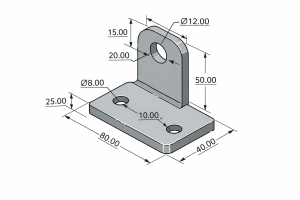
Engineering drawings form the basis for technical communications in manufacturing, construction and design. Engineers have to communicate complex structures and parts in a manner that is precise, clear and understandable. A popular and commonly employed method of presenting three-dimensional objects onto a two-dimensional surface is the isometric projection. This drawing technique allows designers and engineers to see objects with different dimensions while maintaining precise proportions.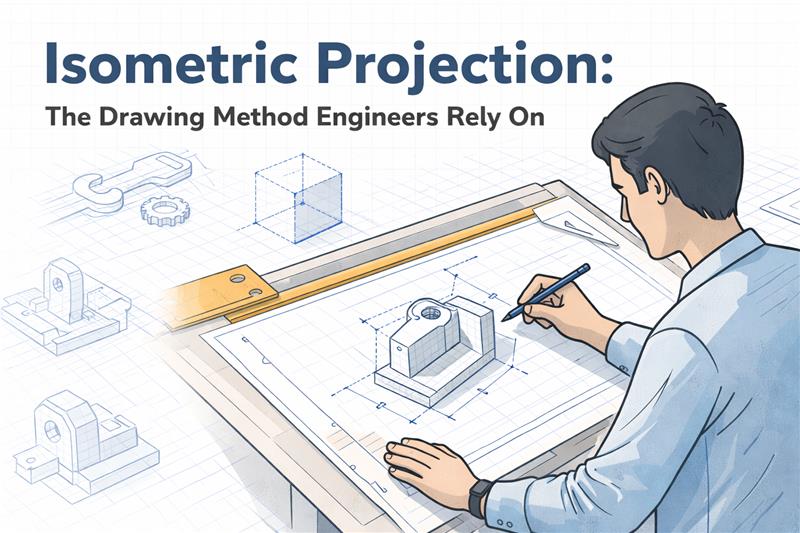
Isometric projection is used extensively in mechanical, civil engineering design architecture, as well as digital modeling workflows. It assists engineers in communicating structural layouts, piping systems and mechanical parts effectively. Modern design practices professionals typically combine traditional drawing principles with digital modeling tools that they have learned by using programs like a Revit Online course or other specialized BIM training.
Knowing the basics of isometric drawing can help professionals and students draw technical drawings that accurately depict real-world structures and objects.
A Quick Guide to Isometric Drawings in Engineering
Isometric drawings are a type of representation in pictorial engineering to show three-dimensional objects on a 2-dimensional plane. Contrary to perspective drawings, which mimic the way that our eyes perceive things, Isometric drawing keeps an equal scale along three axes. The axes are usually placed at 120-degree angles to each other, which allows objects to look balanced as well proportional.
This technique helps engineers visualize objects in a clear and undistorted way. The width, height and depth of a piece can be seen simultaneously, making it simpler to comprehend the overall shape of the design. Since it is clear, these projections are frequently employed in technical drawings, engineering manuals, as well as construction documentation.
Engineering drawing students learn about isometric projection as one of the fundamental concepts. It helps them think spatially and to interpret complicated technical diagrams. Modern engineering education typically integrates these concepts into training in digital design, where students use software to convert drawings in 2D to 3D models.
A lot of professionals are able to improve their design abilities by taking part in training programs such as the Revit Online course, where they are taught how drawing techniques from the past can be integrated with the modern Building Information Modelling workflows.
The Key Characteristics of Isometric Drawing
- Three dimensions are represented in one drawing
- Three axes are used at equal angles
- Maintains consistent proportions
- Provides clear and precise visualisation of difficult objects. Allows clear visualisation of complex
- Often employed in construction and engineering documentation
The ability to draw precise isometric drawings is a vital capability for architects, engineers and designers who are involved within technical communication.
ALSO READ: What is Theodolite Survey? Definition, Methods and Applications
How do Engineers Design Clear Isometric Drawings
Making an accurately drawn isometric requires a mix of technical expertise and a keen eye. Engineers begin by establishing three isometric axes that are the width, height and the depth of an object. These axes are the basis of the drawing and determine the position of each element inside the drawing.
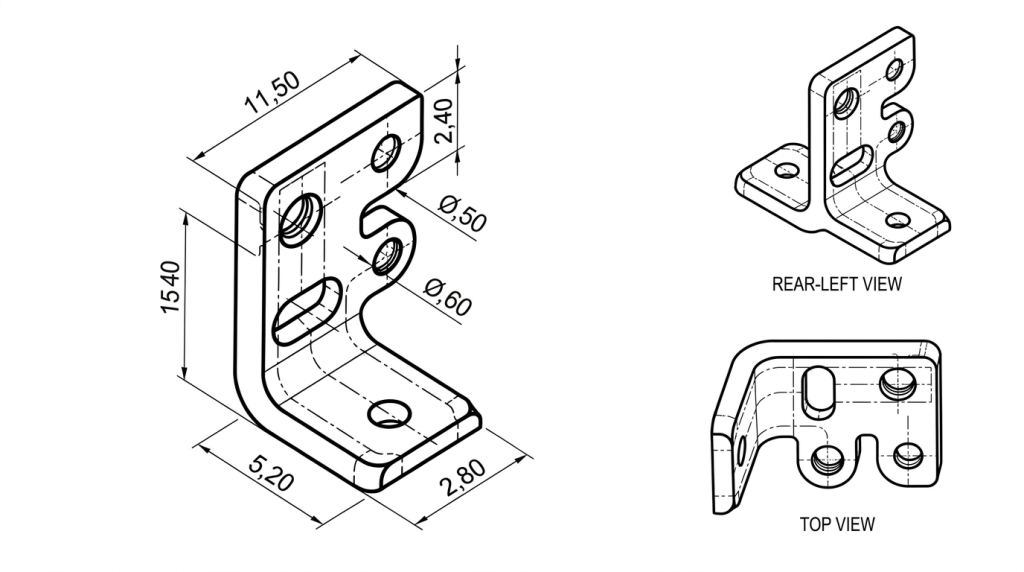
When the axes have been established After that, engineers trace the edges of objects along these directions, while ensuring appropriate proportions. Circles and curves require specific methods because they appear like an ellipse in the isometric projection. Engineers make use of templates or geometric methods of construction to ensure precision.
Clear isometric designs help communicate the design’s intent efficiently across teams. For the construction industry, designers make use of these drawings to show the layout of pipes, structural elements and mechanical systems. The simplicity of isometric drawings helps to avoid confusion during design reviews and planning for construction.
Modern engineering workflows integrate traditional drawing skills with the use of digital tools. Professionals who take BIM courses with placement typically learn how isometric drawings can be included in digital models as well as construction documents.
How to Draw an Isometric Drawing
- Draw three isometric axes with 120deg angles
- Note the dimensions of the object along each axis
- Draw an outline for the item
- Include details like holes or curvatures, or cut-outs
- Keep the same proportions and scale.
These steps assist engineers in creating precise and precise technical drawings utilized in design communication.
An Introduction to Isometric Drawing
For the novice it can appear difficult initially. But once the basic principles are comprehended it is a natural method of expressing three-dimensional objects. The main idea is the fact that vertical lines are horizontal, whereas horizontal edges are angled to the lines of the axes.
Students typically start by drawing simple geometric shapes, such as cubes, cylinders and pyramids. These basic shapes allow them to comprehend how objects appear when projected in an isometric manner. Gradually, they advance to more elaborate structures that are used in architectural and engineering design.
It also helps to develop spatial thinking abilities. Engineers must be able see how the various components work within an architectural structure. This ability is especially important when designing mechanical infrastructure networks, or systems.
Engineering education often combines drawing principles with digital modelling tools. Students taking a course on architecture usually study both traditional technical drawing techniques and computer-aided design software in order to build an array of skills.
The benefits of learning Isometric Drawing
- Improves spatial visualisation skills
- Helps understand technical drawings
- Supports engineering design communication
- Creates the foundation for 3D modeling software
- Increases problem-solving capabilities in designing tasks
The art of isometric drawing can help students connect the gap between design theories and the real-world applications of engineering.
Isometric Drawing Fundamentals to help Students and Engineers
Knowing the fundamentals that are a part of drawing an isometric is crucial for professionals and students who work in the field of engineering. The fundamental concept is to represent three dimensions with equal precision without perspective distortion. This helps ensure that measurements remain exact and consistent.
A very frequent use for isometric drawing is in mechanical and piping system layouts. Engineers make use of these drawings to show the ways that valves, pipes, and fittings are connected to industrial systems. These diagrams offer the clarity that orthographic drawings might not provide.
Isometric drawings also play an important role in the construction documentation. They aid contractors to visualize how the components will be assembled and installed at the site. This is especially helpful in large infrastructure projects, where several systems are interconnected within a limited space.
When it comes to digital workflows isometric drawings are often used in conjunction with BIM diagrams and other technical documents. Discussions such as IFC and Shop Drawings Serve Different Roles highlight how different drawing formats can serve specific functions during the execution of projects.
Comparative Drawing Methods for Different Types of Drawing
| Drawing Type | The purpose | Examples of Use |
| Orthographic Drawing | Displays different views of an object | Architectural plans |
| Isometric Drawing | It shows 3D representation without perspective | Piping layouts |
| Perspective Drawing | Mimics human visual perception | Architectural visualisations |
Knowing these drawing techniques helps engineers choose the best method to communicate information about their designs effectively.
Practice Isometric Drawing Techniques
Practical isometric drawing requires applying theoretical concepts to actual engineering designs. Engineers need to ensure that every measure and line accurately reflects the shape of the object. The accuracy of the drawing is vital since even small drawing mistakes could lead to misinterpretations regarding design interpretation. An effective method is to create isometric grids. These grids help in the positioning of angles and lines which makes it easier to keep proportions in the right place. Engineers also employ geometric techniques to draw circles and curves on surfaces precisely.
Another method is to layer information into intricate diagrams. Instead of cramming everything into an entire diagram, engineers can break down mechanical, structural and electrical components to ensure clarity. This method ensures that every element is easily comprehended in review of design.
Modern engineers are often able to improve their drawing and modelling abilities through training programs that are specifically designed for them. The training offered through an Revit Online course, or BIM course with placement feature helps engineers integrate traditional drawing techniques using digital modeling techniques in the modern construction industry.
Practical Tips to accurate Isometric Drawing
- Always maintain the same angles between Axes
- Use light construction lines before finalising shapes
- Make sure you are following the measurements closely to ensure the scale
- Make a habit of drawing simple objects prior to creating complex systems.
- Utilize templates to create precise curves and circles.
These techniques assist engineers in creating technical drawings that convey complicated information effectively and clearly.
“The engineer has been, and is, a maker of history.”
— James Kip Finch
“Without engineers, modern civilization would simply not exist.”
— Queen Elizabeth II
Conclusion
Isometric projection is an extremely reliable technique to show three-dimensional objects on engineering drawings. Its capability to show width, height and depth at once can be a very effective communication tool for construction and design projects.
From exercises for students to professional engineering documentation, isometric drawings can help convert complex concepts into clear visual representations. When you understand the basic principles of isometric projection engineers and designers will be able to communicate concepts in a clear and concise manner.
The traditional drawing techniques are becoming increasingly integrated with digital modeling tools utilized in contemporary engineering workflows. Professionals who take part in training programs like the Revit Online course, BIM course with placement of objects, or a special course on architecture gain abilities that link traditional engineering drawing techniques with modern digital design tools.
As the field of design and construction continues to advance and evolve, the fundamentals of isometric drawing will continue to be an essential ability for architects, engineers as well as technical professionals.
FAQs Related to Isometric Projection
1. What is isometric projection in engineering drawing?
Isometric projection is a technical drawing method used to represent a three-dimensional object on a two-dimensional surface. It shows height, width, and depth simultaneously using three axes placed at equal angles.
2. Why is isometric drawing important for engineers?
Isometric drawing helps engineers visualise complex structures clearly and communicate design ideas effectively between designers, contractors, and project teams.
3. What is the difference between isometric drawing and orthographic drawing?
Isometric drawing shows a 3D view of an object, while orthographic drawing represents an object using separate 2D views such as top, front, and side elevations.
4. Where are isometric drawings commonly used?
Isometric drawings are widely used in civil engineering, mechanical design, piping layouts, architecture, and construction documentation.
5. What are the three axes used in isometric projection?
The three axes in isometric projection represent height, width, and depth, and they are typically positioned 120 degrees apart.
6. Is isometric drawing still relevant in the BIM era?
Yes. Even in the BIM era, isometric drawings remain useful for explaining layouts, piping systems, and structural details, especially during construction coordination.
7. How do beginners start learning isometric drawing?
Beginners usually start with simple shapes like cubes, cylinders, and prisms to understand how objects appear in isometric projection.
8. What tools are used to create isometric drawings?
Traditional isometric drawings use drawing boards, T-squares, and set squares, while modern engineers use CAD and BIM software.
9. How does isometric drawing help construction teams?
It provides a clear visual understanding of complex systems, which helps construction teams interpret designs accurately during installation.
10. Can isometric drawings be created using software?
Yes. Many modern design tools such as AutoCAD, Revit, and other BIM software can generate isometric views automatically from 3D models.
Quotes Related to Engineering, Drawing, and Design
- “Engineering is achieving function while avoiding failure.”
— Henry Petroski - “Civil engineering is the art of directing the great sources of power in nature for the use and convenience of mankind.”
— Thomas Tredgold - “Design is not just what it looks like and feels like. Design is how it works.”
— Steve Jobs - “Engineers like to solve problems. If there are no problems handily available, they will create their own.”
— Scott Adams - “Science is about knowing; engineering is about doing.”
— Henry Petroski - “A great building must begin with the unmeasurable, must go through measurable means, and end up unmeasurable.” — Louis Kahn