Walk through any Indian city and you’ll see it: architecture isn’t just “buildings.” It’s courtyards that pull people together, steps that double as seating, shaded edges that become social rooms, and façades that carry identity. Now imagine dropping a temporary, walk-through artwork into that environment, something you can touch, sit under, listen to, and move through. That’s where collaborative installations shine: they sit right at the intersection of art, architecture, engineering, and community.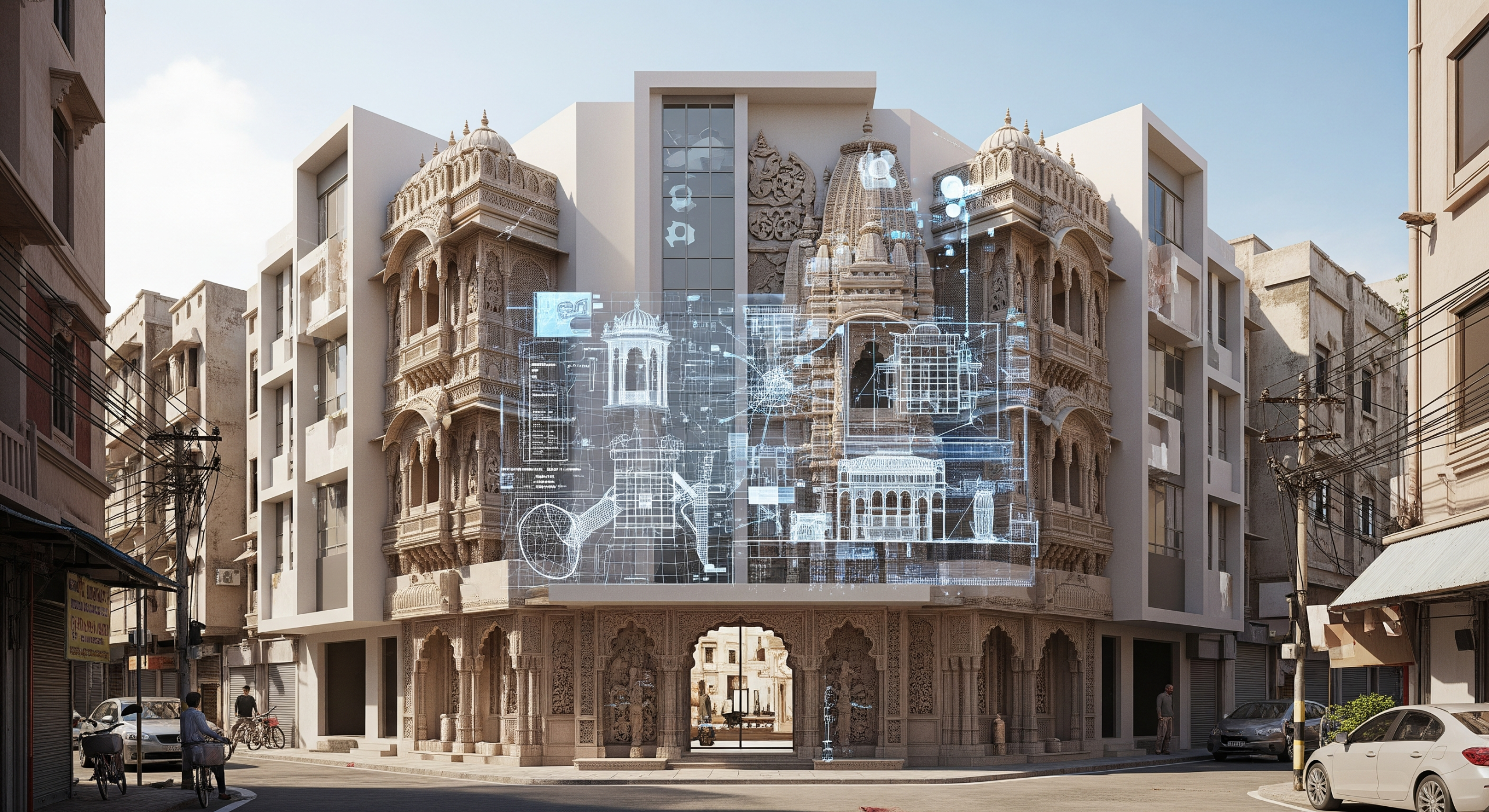
In this blog, we’ll explore why India is such a powerful setting for these collaborations, what makes an installation succeed (or fail), and how digital workflows, especially BIM, are quietly changing how these pieces are designed, coordinated, and built.
What a “creative collaborative installation” really means
A collaborative installation isn’t a sculpture placed in front of a building. It’s an experience that uses space as the medium.
Think of it like this:
- Artists bring narrative, emotion, symbolism, and participation.
- Architects shape circulation, proportion, light, shade, and spatial sequence.
- Engineers and fabricators make it safe, stable, buildable, and durable.
- Communities and curators influence meaning, access, and cultural fit.
Why India is a natural playground for art + architecture collaborations
India offers a rare combination of ingredients that make installations feel both fresh and deeply rooted:
1) A culture of public life
Indian streets, markets, ghats, maidans, and beaches already function like shared living rooms. Installations don’t have to “create” public engagement from scratch, they can plug into an existing social rhythm.
2) Climate that demands spatial creativity
Shade, breeze, monsoon protection, and heat comfort aren’t optional. They drive form. This is why architectural installations that behave like micro-climates often land so well with visitors.
3) A living craft ecosystem
From terracotta and stone to bamboo, textiles, lime plaster, and metalwork, India’s maker culture gives installations a tactile richness that purely digital design can’t replace.
4) Festivals and biennales that invite experimentation
Large platforms push artists and architects to prototype ideas at full scale, sometimes in heritage precincts, sometimes in raw public spaces.
A real example of architecture behaving like art: Terra-Grove in Goa
One of the clearest “art-meets-architecture” moments is Terra-grove, featured at Serendipity Arts Festival in Panjim, Goa. It’s essentially a public-space installation that rethinks shade and gathering, curving vaults spiralling around existing trees and using terracotta tiles to create a cooler, more inviting place to pause.
This is a perfect example of what makes a collaborative installation feel worth it:
- It’s visually distinctive and functionally useful.
- It respects the site (the trees aren’t treated as obstacles).
- It creates an “in-between” space, neither indoor nor outdoor—which is exactly where Indian public life thrives.
Kochi-Muziris Biennale and the idea of the city as a “living ecosystem”
If you want to understand the scale of collaboration possible in India, look at the Kochi-Muziris Biennale, widely recognized as a major contemporary art event. The official Biennale site highlights the 2025–2026 edition and names Nikhil Chopra (with hh art spaces) as curator.
What matters for architects and designers is how these events treat the city itself as a canvas. The 6th edition (per published reporting) is scheduled from December 12, 2025 to March 31, 2026, positioning the Biennale as an evolving, collaborative ecosystem rather than a single static show.
The hard truth: collaboration is beautiful… and messy
A lot of installations fail, not because the concept is weak, but because the collaboration breaks down. These projects move fast, involve many stakeholders, and often sit in complex public or heritage contexts.
Here are the most common tradeoffs teams need to manage:
Art freedom vs. structural reality
Artists want surprise and delicacy. Engineers want predictability and safety. The winning solution usually isn’t “either/or”, it’s a smarter detail, a better connection, a different material, or a clearer load path.
Temporary impact vs. long-term responsibility
Temporary doesn’t mean consequence-free. Even short-run installations must consider crowd safety, accessibility, maintenance, and post-event removal without damaging the site.
Local materials vs. schedule certainty
Local craft can be the soul of the piece. But if procurement and fabrication aren’t planned early, the schedule collapses and teams default to generic systems that dilute the concept.
Spectacle vs. comfort
If visitors can’t stand, sit, breathe, or move comfortably, engagement drops. In India, comfort is often the difference between a viral moment and a forgettable one.
Where BIM fits in (and why it matters more than people admit)
Even though installations feel artistic, the delivery is very much a construction problem: coordination, tolerances, quantities, safety, and speed.
That’s where BIM becomes a quiet superpower, especially when the team treats it as a collaboration method, not just a model.
Also, BIM workflows are increasingly used across architecture, MEP, clash detection, scan-to-BIM, and LOD-based delivery, skills that translate directly to complex temporary builds.
And here’s the part many creatives overlook: BIM adoption is an operating-model shift, not a simple software rollout. If teams treat it like “install Revit and go,” they waste time and licenses. If they treat it like a cross-discipline workflow change, coordination quality improves and rework drops.
Timing is a design decision, not a calendar detail
Installations in India live and die by when they happen. Timing affects everything:
- Heat and sun angles (comfort, shadow design, material performance)
- Monsoon exposure (drainage, foundations, corrosion, safety)
- Festival calendars and tourist cycles (footfall patterns)
- Approval lead times (especially in public/heritage settings)
- Fabrication reality (craft production can’t be rushed without quality loss)
If you ignore timing, you end up redesigning late or worse, value-engineering the concept into something bland.
Skills that help you design and deliver installations (without burning out)
If you’re an architect, designer, or BIM professional who wants to contribute to projects like this, don’t chase tools randomly. Build a stack that supports both creativity and delivery.
A practical roadmap looks like this:
- Start with fundamentals through bim courses that explain coordination, LOD thinking, and model-based documentation.
- Choose flexible bim online courses so you can keep learning while working (consistency beats intensity).
- Pair that with a strong course on architecture that sharpens spatial thinking, installations are spatial stories first.
- Go deeper into bim for architects so you can translate design intent into coordinated, buildable outputs.
- Add autocad revit courses to cover both legacy drafting expectations and modern parametric workflows.
- Consider a software architect course (in the practical sense: how design software ecosystems work together, Revit, Rhino/Grasshopper, visualization tools, coordination platforms).
Finally, level up with a focused bim software course that includes real coordination scenarios, not just tool buttons.